
Lapis Lazuli





Lapis Lazuli: Meanings and Properties
Lapis Lazuli is one of the most revered and beloved gemstones in human history, prized for its intense, celestial blue color and its profound spiritual associations. It is not a single mineral but a rock, composed primarily of the deep blue mineral lazurite (a feldspathoid silicate), along with varying amounts of white calcite and sparkling golden pyrite . Its name is derived from the Latin lapis ("stone") and the Arabic lazaward (from the Persian lāžward), meaning "blue" or "heaven" .
The finest quality lapis, with its uniform, deep blue color and minimal calcite veining, has been sought after for millennia. Its primary source for over 6,000 years has been the remote mines in the Badakhshan province of Afghanistan, which still produce the world's finest material .
Its core meanings, built upon a legacy of royalty, divinity, and wisdom, revolve around truth, wisdom, royalty, spiritual enlightenment, and self-awareness.
Core Meanings and Symbolism
1. Truth, Wisdom, and Self-Awareness
Lapis Lazuli is most famously known as a stone of truth. It encourages honesty in all forms—speaking the truth, living one's truth, and seeking the truth within oneself.
-
Meaning: It symbolizes the pursuit of wisdom and the courage to be authentic. It helps to clear away self-deception, denial, and illusion, revealing one's true self and purpose . It encourages objectivity, clarity, and the ability to see situations as they really are . This is why it has been considered a stone for philosophers and truth-seekers for centuries.
2. Royalty, Power, and Status
The deep, rich blue of lapis lazuli has long been associated with royalty, divinity, and power. It was the stone of kings, pharaohs, and high priests.
-
Meaning: It symbolizes nobility, authority, and spiritual power. It helps the wearer to recognize their own inner power and to act with confidence, integrity, and grace . It encourages leadership qualities that are both wise and compassionate.
3. Spiritual Enlightenment and Connection
Lapis Lazuli is a stone of profound spiritual awakening. It opens the mind to higher wisdom and facilitates a deep connection to the spiritual realm.
-
Meaning: It symbolizes divine knowledge, enlightenment, and the expansion of consciousness. It activates the third eye and crown chakras, enhancing intuition, psychic abilities, and communication with spirit guides . It is a powerful tool for meditation, helping to quiet the mind and access inner wisdom.
4. Communication and Self-Expression
Lapis Lazuli is a stone of articulate expression. It helps to align one's words with one's truth, making communication more powerful and authentic.
-
Meaning: It symbolizes clear, honest, and confident self-expression. It encourages you to speak your truth without fear, and to express your thoughts and feelings with clarity and conviction . It is an excellent stone for writers, public speakers, and anyone who needs to communicate effectively.
5. Protection and Purification
Lapis Lazuli has been used for millennia as a protective talisman, warding off psychic attacks and negative energies.
-
Meaning: It symbolizes a shield of royal blue light and a cleanser of the aura. It is believed to protect the wearer from harm, absorb negative energy, and purify the mind and spirit . In ancient Egypt, it was placed in tombs to protect the dead and guide them in the afterlife .
6. Emotional Healing and Inner Peace
Lapis Lazuli has a calming, centering energy that helps to bring emotional balance and release stress.
-
Meaning: It symbolizes emotional equilibrium, inner peace, and the release of old wounds. It helps to alleviate anxiety, depression, and feelings of overwhelm by bringing clarity and perspective to emotional turmoil . It encourages self-acceptance and compassion.
Lapis Lazuli and the Chakras
Lapis Lazuli is most powerfully connected to the upper chakras, which govern intuition, wisdom, and spiritual connection.
-
Third Eye Chakra (Ajna): This is its primary domain. Lapis Lazuli opens, activates, and balances the third eye chakra, enhancing intuition, psychic vision, and the ability to access inner wisdom .
-
Throat Chakra (Vishuddha): It also strongly resonates with the throat chakra, empowering clear, honest, and authentic self-expression . By combining the energy of the third eye and throat, it allows you to speak your truth with wisdom and clarity.
-
Crown Chakra (Sahasrara): Its connection to divine wisdom and spiritual enlightenment also opens and activates the crown chakra, facilitating a connection to higher consciousness and universal truth .
History, Folklore, and Fascinating Facts
-
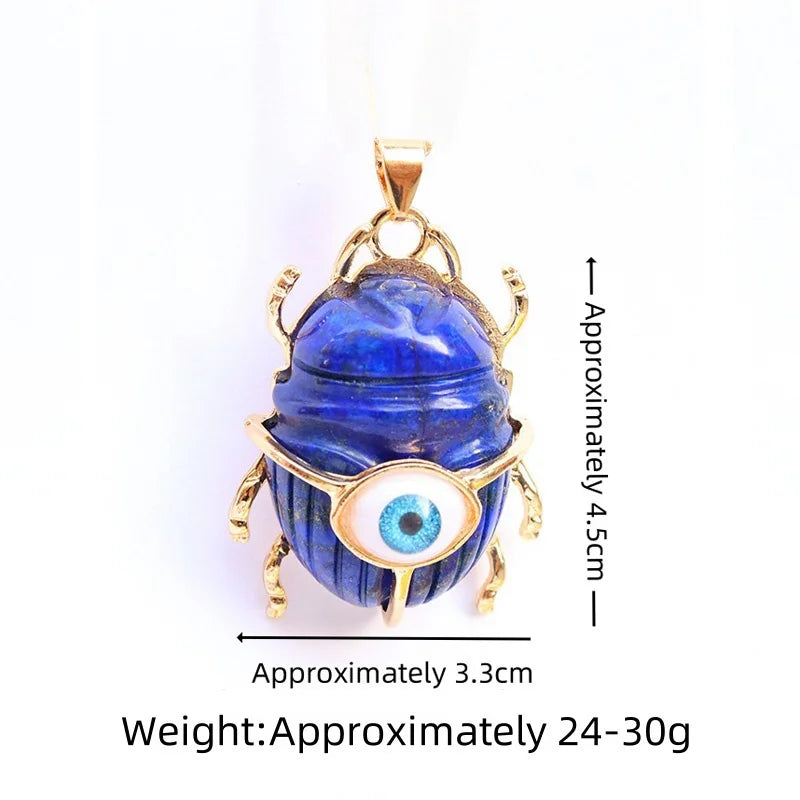
Ancient Egypt: Lapis Lazuli was the favorite stone of the Pharaohs. It was ground into powder to create the brilliant blue eyeshadow worn by queens like Nefertiti and Cleopatra . It was also carved into sacred amulets, scarabs, and inlays for tombs, including the famous funerary mask of King Tutankhamun . They believed it provided protection and guidance in the afterlife .
-
Mesopotamia: The famous Standard of Ur, a 4,500-year-old Sumerian artifact, is beautifully inlaid with lapis lazuli, demonstrating its high value and use in depicting scenes of royalty and war .
-
The Word "Ultramarine": During the Renaissance, lapis lazuli was ground into the most expensive and prized blue pigment, called Ultramarine (meaning "beyond the sea"). It was reserved for painting the robes of the Virgin Mary and Christ in religious art, signifying their holiness and divinity . Masters like Vermeer famously used it, often driving themselves into debt for the precious pigment .
-
The Persian Connection: The name lazaward from Persian gives us the word "azure," a testament to the stone's influence on our very concept of the color blue .
-
Mythological Associations: The ancient Greeks associated it with Aphrodite (goddess of love) and believed it could kindle love in all its forms . The Sumerians believed it contained the soul of their gods and was a stone of great power .
-
Royal Gift: Throughout history, lapis lazuli was considered a gift fit for kings and emperors, used to adorn palaces, crowns, and royal regalia across Persia, Greece, and Rome .
-
Care: Lapis Lazuli has a hardness of 5 to 6 on the Mohs scale. It is relatively soft and porous, so it should be protected from scratches, harsh chemicals, and prolonged immersion in water .
Lapis Lazuli vs. Sodalite vs. Azurite
Lapis is often confused with other blue stones. Here's a quick guide:
| Stone | Key Features | Primary Meaning |
|---|---|---|
| Lapis Lazuli | Deep royal blue with golden pyrite flecks and possible white calcite veins. | Truth, wisdom, royalty, spiritual enlightenment. |
| Sodalite | Deep blue with white calcite veins (no pyrite), more uniform. | Logic, rational thought, truth, intuition, calm. |
| Azurite | Deeper, brighter blue, often with malachite, can be more translucent. | Deep intuition, psychic development, clearing the mind. |
In short, Lapis Lazuli is the Stone of Kings, a gem of ultimate truth, wisdom, and spiritual power. Its celestial blue, flecked with gold, has represented royalty and divinity for over six millennia, guiding pharaohs, inspiring prophets, and adorning the Virgin Mary. It is a stone for anyone seeking to know their true self, speak their truth, and connect with the wisdom of the heavens.
Lapis Lazuli: An Introduction (Concise)
Lapis Lazuli is one of history's most revered gemstones, a deep blue rock prized for its celestial color and spiritual power. It is not a single mineral but a composition primarily of blue lazurite, often accompanied by sparkling golden pyrite and white calcite . Its name comes from the Latin lapis ("stone") and the Arabic lazaward ("blue" or "heaven") . For over 6,000 years, the finest lapis has been mined in Afghanistan, the source of its legendary quality .
Known as the "Stone of Truth" and the "Stone of Kings," Lapis Lazuli is prized for its ability to awaken wisdom, enhance self-awareness, and empower honest self-expression . It opens the Third Eye and Throat Chakras, allowing you to see the truth and speak it with clarity and conviction . It symbolizes royalty, nobility, and spiritual power, and has been used for millennia as a protective talisman for leaders and seekers alike .
Its rich history is unparalleled. In ancient Egypt, it adorned the mask of King Tutankhamun and was ground for Cleopatra's eyeshadow . In Mesopotamia, it decorated the famous Standard of Ur . During the Renaissance, it was ground into the priceless blue pigment Ultramarine, reserved for painting the robes of the Virgin Mary . Lapis Lazuli remains a powerful stone for philosophers, leaders, and anyone on a path of self-discovery, seeking to live a life of truth and purpose. It is associated with the zodiac signs Sagittarius, Virgo, and Libra .